
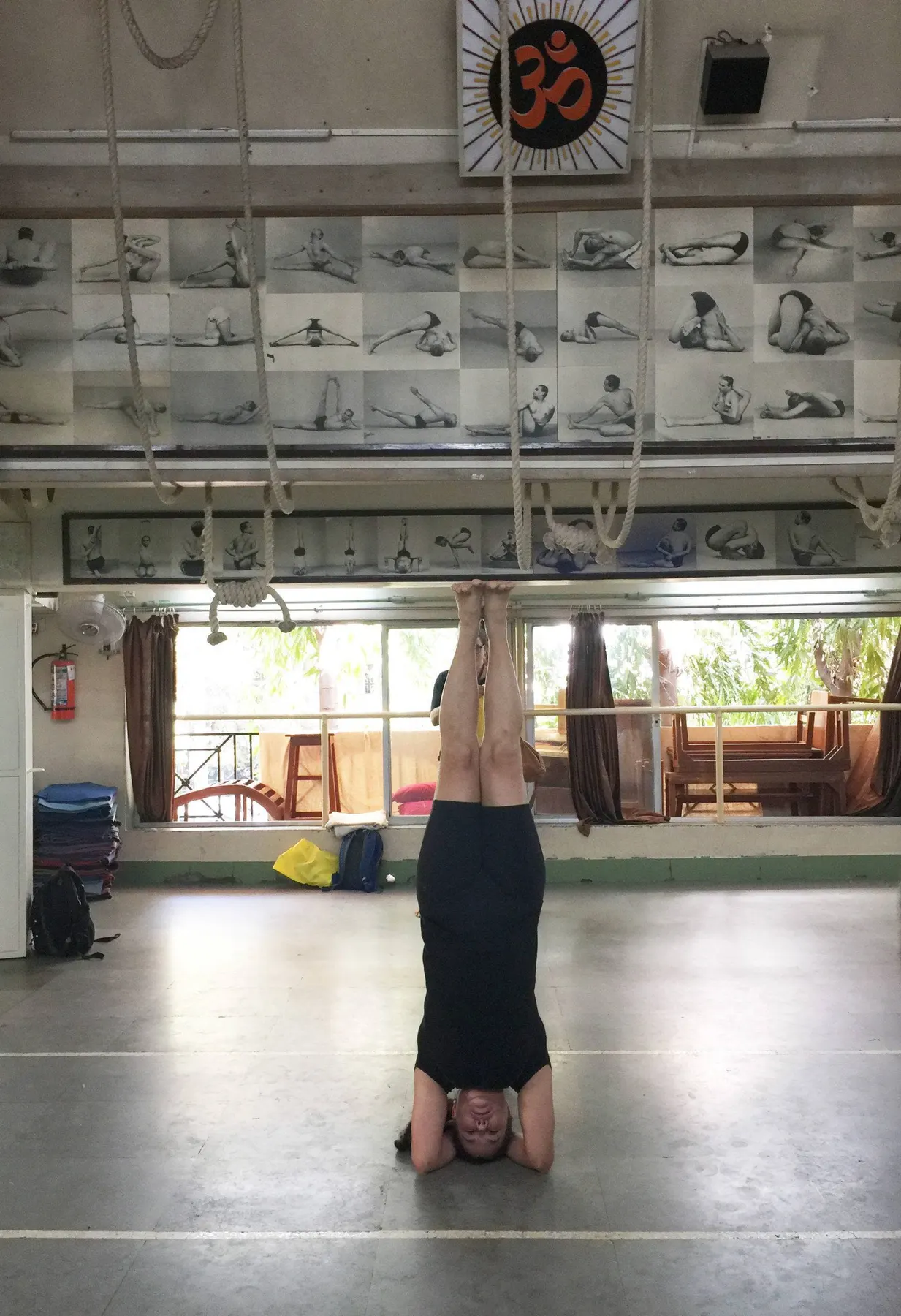
Iyengar is defined in the Oxford Dictionary as “a type of hatha yoga focusing on the correct alignment of the body, making use of straps, wooden blocks and other objects as aids to achieving the correct postures.”
Prashant Iyengar, B.K.S Iyengar’s son says that there are three defining characteristics of Iyengar Yoga: technical intricacies, sequencing, and timings.
Technical intricacies have to do with the precise and subtle technical points that need to be focused on during the asanas
Sequencing has to do with the way different postures are intertwined together to achieve a specific physical and mental state.
Timing has to do with the amount of time that each posture is held for to challenge yourself.
Iyengar Yoga is a school of yoga created during the 1930s and based on the teachings of B.K.S. Iyengar. He brought this work together in his book, Light on Yoga, published in 1966. It is based on the Patanjali Yoga Sutras, an ancient yoga text. Iyengar Yoga is known for using props to assist students with yoga postures. At the beginning of B.K.S Iyengar’s career, he would help his students by using his own body to make sure the postures were done correctly, such as placing his foot under a student’s back to help in the bridge posture (setu bandha sarvāngāsana). Many of his students had trouble reaching the postures (asanas), so he began using different household items, such as chairs, belts and wooden bricks as props. This was how props started being used for yoga. Props are used in many different ways and for many different purposes. Mainly, they facilitate learning and help students adjust the body properly. In this way, they can practice the asanas and bring awareness more easily to different parts of the body. The use of the props depend on individual needs.
B.K.S. Iyengar was once asked why he didn’t patent the design of the props he had developed, props now used in many types of yoga. He replied: “I designed props so people can benefit. Thousands are benefiting and will continue to benefit from them. Does God ever file a patent for his creation? then what right do I, a mortal have to do so?”